
perimenopause
Perimenopause in Miami: Symptoms, Menopause Care Options, and What to Ask an OB-GYN

What is perimenopause?
Perimenopause is the time between your childbearing years and menopause. During this transition, your periods and symptoms may change before menopause begins, so noticing a pattern can give you useful topics to discuss with an OB-GYN.
Menopause is generally defined as having no period for one year. Perimenopause comes before that point. During menopause, the ovaries stop making certain hormones and no longer release eggs.
A changing cycle, hot flashes, vaginal dryness, or trouble sleeping may occur during perimenopause, but your experience can look different from someone else’s. Symptoms may happen all the time or come and go.
Perimenopause can affect daily life and sleep even when symptoms are mild at first. The practical question is not whether every change fits a label; it is what you have noticed, how often it happens, and what you want to discuss with an OB-GYN in Miami.
A simple starting point is to write down changes in your periods, sleep, temperature sensations, vaginal comfort, mood, and daily routine. That record cannot determine the cause by itself. It can help you describe your experience clearly when you seek menopause care.
What changes might you notice?
Perimenopause symptoms may include irregular periods, vaginal dryness, hot flashes, or trouble sleeping. Symptoms can be mild or very uncomfortable, and they may affect daily life and sleep.
Menopause symptoms can also affect mood, memory, intimacy, and more. Everyone’s experience is different, so a short list of common symptoms should be used as a conversation guide rather than a personal diagnosis.
You may notice one change first, several changes together, or symptoms that appear and disappear. Hot flashes can involve a sudden feeling of heat with sweating and sometimes chills. Sleep problems may be connected with night sweats, but the experience is not the same for everyone.
A symptom log can organize what you notice before an OB-GYN conversation. Keep the record simple:
- Note changes in bleeding or the timing of periods.
- Record hot flashes, night sweats, or trouble sleeping.
- Write down vaginal dryness, urinary frequency, mood changes, or effects on intimacy.
- Add how a symptom affects work, rest, relationships, or ordinary tasks.
- Mark whether each change happens every day or comes and goes.
The immediate use of this list is clarity. You can bring it to a menopause visit and use it to explain which changes concern you most. Vaginal dryness and urinary frequency may continue or even worsen over time..
How long can the transition last?
The duration of the transition and the duration of bothersome symptoms are different timeframes. The source says women experience bothersome menopause symptoms for about four years on average, while perimenopause usually lasts about five years.
For most women, hot flashes, night sweats, and sleep problems start to improve within a couple of years after menopause begins. These patterns do not tell you what will happen in your case, but they explain why symptom tracking should include more than temperature changes.
Use the timeline as context, not as a reason to wait through symptoms that affect your life or sleep. An OB-GYN can help you discuss what you are noticing and what kind of menopause care conversation you want.
When should you talk with an OB-GYN?
You should arrange an OB-GYN conversation when possible perimenopause symptoms affect daily life or sleep. Symptoms can range from mild to very uncomfortable, and a clinician may discuss options when hot flashes, mood changes, or other concerns begin interfering with your routine.
A conversation can also make sense when you want help understanding an irregular pattern, vaginal dryness, sleep problems, or changes in intimacy. You do not need to wait until every possible symptom appears. You can bring one concern and a short record of what has changed.
Use concern and impact as practical reasons to seek evaluation. If a new or worrying symptom concerns you, contact a qualified healthcare professional for an assessment. Contact a qualified healthcare professional when you need an assessment rather than trying to label the change yourself.
Questions for an OB-GYN can make the visit more focused. You might ask:
- Could my period changes and other symptoms fit the menopausal transition?
- Which symptoms should I track between visits?
- What options may be discussed for hot flashes, mood changes, sleep problems, or vaginal dryness?
- Could lifestyle changes be part of the conversation?
- What should I bring to a follow-up discussion about treatment?
These questions keep the focus on your symptoms, goals, and choices. A clinician may discuss lifestyle changes or medication for symptoms such as hot flashes and mood swings. Ask for explanations in plain language so you understand what each option is intended to address.
What should you bring to a menopause visit?
A symptom record, a list of questions, and a clear description of your goals can prepare you for a menopause visit. Preparation does not need to be formal or long; a few dated notes can be enough to start the discussion.
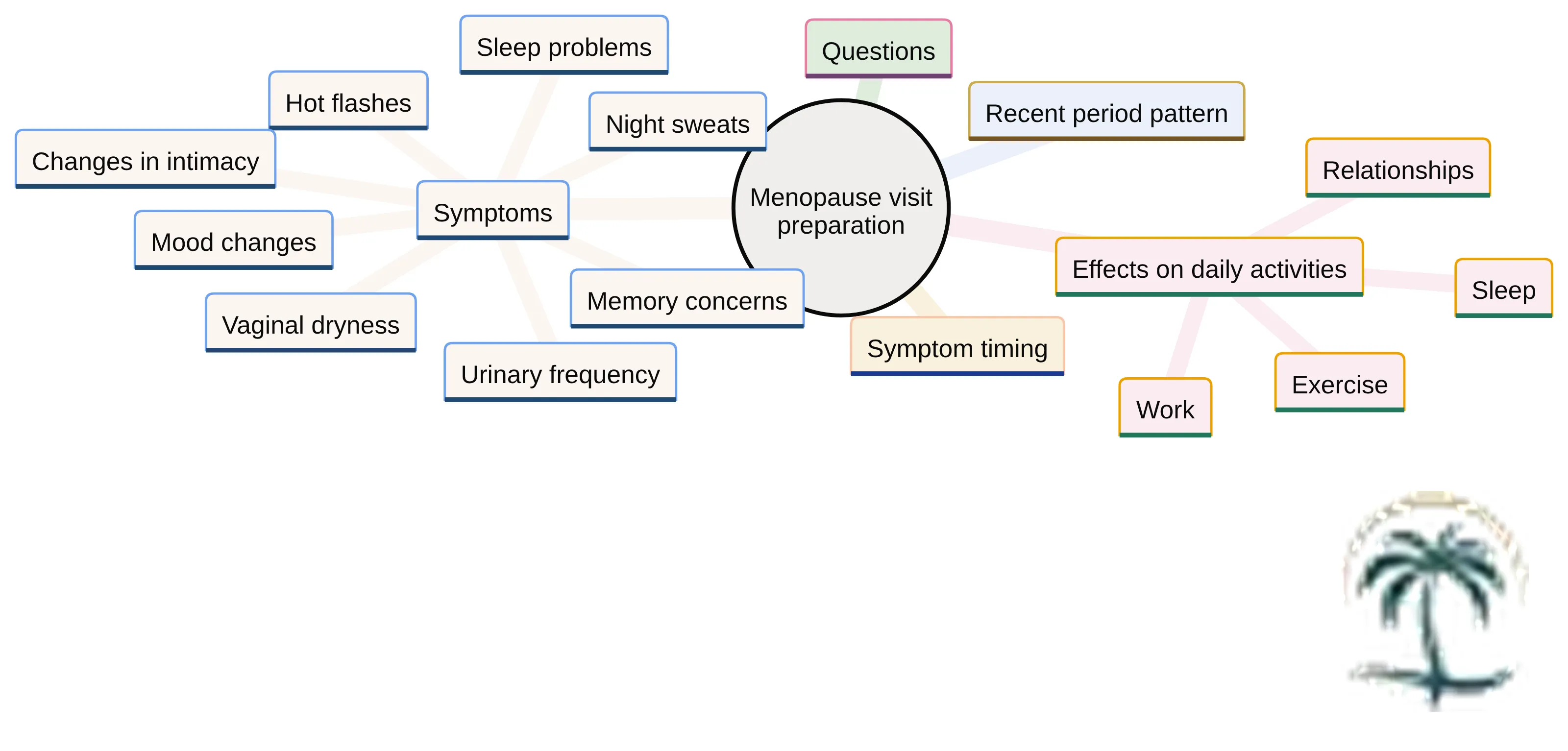
Bring these details if they apply to you:
- Your recent period pattern, including changes in timing or flow.
- Symptoms such as hot flashes, night sweats, sleep problems, vaginal dryness, urinary frequency, mood changes, memory concerns, or changes in intimacy.
- The times symptoms occur and whether they come and go.
- The effect on sleep, work, relationships, exercise, or other daily activities.
- The two or three questions you most want answered.
Menopause symptoms can affect sleep, memory, mood, intimacy, and more, so do not limit your notes to hot flashes. The purpose of this list is to give your OB-GYN a usable description of your experience.
Your treatment goals belong in the conversation too. You may want to talk about sleep, hot flashes, mood swings, vaginal comfort, urinary symptoms, or the effect of changes on your routine.
Write down what you want help understanding before the appointment. For example, you may want to know whether lifestyle changes, medication, hormone therapy, or a combination of discussions belongs on the agenda. The clinician can explain which topics apply to your situation.
A prepared question is not a request for a specific treatment. It is a way to make the visit more useful and keep the conversation connected to what you actually notice.
Before the visit, separate what you observed from what you want to decide. For example, “I wake during the night” describes an experience, while “I want to understand options for sleep” states a goal. Bringing both helps keep the conversation specific without assuming the cause or choosing a treatment in advance. It also gives you a simple way to check whether the written plan addresses the concerns you raised.
What may a menopause-care visit cover?
A menopause-care visit may cover your symptoms, their effect on daily life, possible evaluation, and treatment options. A clinician may ask about sleep, mood, hot flashes, intimacy, vaginal symptoms, and other changes so the discussion is tied to your experience.
The visit may also include a conversation about lifestyle changes or medication for symptoms such as hot flashes and mood swings. Questions you bring can help you understand what each option is meant to address and what you want to consider next.
The visit should leave you with a clearer set of topics to discuss, not a one-size-fits-all answer. Your notes give the clinician a starting point, while your questions help define the concerns that matter most to you.
Our menopause care service is planned to include evaluation and treatment of perimenopause and menopause symptoms, including hormone therapy options and a written plan. When Vireo Women’s Health opens in 2027, that structure will give you a way to discuss what you have noticed and identify the topics you want addressed.
A written plan can name the symptoms under discussion, the options considered, and the next questions for your care. It is a record of the conversation, not a promise that one treatment will suit every person. The appropriate plan depends on your individual situation and the decisions you make with a qualified professional.
That written plan can also help after the conversation. You can use it to remember which symptoms were discussed, which questions remain open, and what you want to revisit. It should support the next discussion without turning a general article into a personal treatment decision.
How do hormone and non-hormonal options differ?
Hormone therapy is one treatment category that may be discussed for menopause symptoms. The Menopause Society says hormone therapy is the most effective treatment for hot flashes and genitourinary symptoms, and it has been shown to prevent bone loss and fracture.
That statement describes the treatment category and the outcomes addressed in the position statement. It does not decide whether hormone therapy fits your health history, symptoms, timing, or preferences. Those questions belong in an individualized discussion with an OB-GYN or another qualified clinician.
This category gives you another topic to discuss when you are considering menopause care; it does not name one universal plan.
The useful comparison is not a simple winner between hormone therapy and non-hormonal options. Ask which symptoms you want to address, what each discussed option is intended to do, and how benefits and risks would be reviewed over time. Keep those questions separate from the assumption that a treatment is automatically suitable for you.
The Menopause Society recommends shared decisions, personalized treatment, and periodic review of the benefits and risks. Bring your symptom notes and ask the clinician to explain the choices in terms you can use.
A useful comparison starts with the symptom, not the label. You might ask whether the discussion is focused on hot flashes, vaginal or urinary changes, sleep, mood, or another concern. Then ask what the option is intended to address and how the benefits and risks will be reviewed. This keeps “hormonal” and “non-hormonal” from sounding like complete answers on their own. The categories describe types of options; they do not replace a conversation about your goals and individual risks.
Why is treatment planning personal?
Age and time since menopause are part of the risk discussion for hormone therapy. The Menopause Society recommends considering both when assessing hormone-therapy risks.
That context is why a general article cannot determine eligibility or select a dose, duration, regimen, or route for you. Use this information to prepare questions instead: ask how your timing, symptoms, goals, and preferences affect the conversation, and ask when the plan should be reviewed.
Personalized care should still be clear care. You can ask the clinician to explain the reason for each option, the symptoms it addresses, and the point at which the discussion should be revisited.
What should you ask about insurance and cost?
Insurance and cost questions should be part of your menopause-care preparation. Ask your health plan which parts of the visit and treatment discussion are covered, what you may pay, and whether hormone therapy or non-hormonal medication has separate coverage rules.
You can use this short list when speaking with an insurer:
- Is a menopause-care or OB-GYN visit covered under my plan?
- What copay, deductible, or other out-of-pocket amount applies?
- Are hormone therapy and non-hormonal medications covered, and where would I fill them?
- Does the plan require a referral or prior authorization for any part of care?
- Is follow-up care covered under the same terms?
These are questions to ask your plan, not assumptions about what every plan pays. Write down the answer, the date of the call, and any reference details your insurer gives you.
Also ask when a cost would be due and whether the answer applies to an initial visit, follow-up care, testing, or medication. Coverage can differ by the service being discussed, so a general “yes” from an insurer may not answer every part of your question. Keep the plan’s written information with your notes so you can refer back to the exact terms.
Healthcare.gov lists bone-density screening as a covered preventive service for women over 65 and for some younger women after menopause. The listed group includes women 64 or younger who have gone through menopause.
That information does not establish coverage for every menopause visit, treatment, or insurance plan. Ask whether the preventive service applies to your plan and circumstances, and ask how any separate menopause-care services would be handled. Keeping preventive screening questions separate from treatment-cost questions can make the conversation easier to follow.
What is the next step with Vireo Women's Health?
Your next step can be simple: note the changes you have noticed, choose the questions you want answered, and arrange an OB-GYN conversation when symptoms affect daily life or sleep. Treatment choices depend on your individual benefits, risks, goals, and preferences, so a qualified professional must decide whether a specific option is suitable for you.
Vireo Women’s Health plans to open in 2027 for women in Miami considering menopause care. Nothing is booked now, and there is nothing to pay now. If that timing fits your plans, you can join the waitlist for the planned opening.
What common questions come up about perimenopause, menopause care, and the waitlist?
What are common symptoms of perimenopause?
Common symptoms of perimenopause include irregular periods, hot flashes, vaginal dryness, and trouble sleeping. These symptoms can vary in intensity and may affect daily life.
When should I talk with an OB-GYN about perimenopause symptoms?
You should consider talking with an OB-GYN when your symptoms affect daily life or sleep. Even if you have only one concern, it’s helpful to discuss it with a professional.
What should I bring to a menopause visit?
For a menopause visit, bring a symptom record, a list of questions, and a clear description of your treatment goals. This preparation can help guide the conversation.
What may a menopause-care visit cover?
A menopause-care visit may cover your symptoms, their impact on daily life, possible evaluations, and treatment options, including lifestyle changes and medications.
What questions should I ask about insurance and costs related to menopause care?
You should ask your health plan about coverage for menopause visits, copays, deductibles, and whether hormone therapy or non-hormonal medications are covered.
What is the next step with Vireo Women's Health?
Vireo Women’s Health plans to open in 2027. You can join the waitlist to express interest in menopause care when the practice opens.
Living with this?
We treat this in Miami.
Our clinicians are board-certified in obstetrics and gynecology. Reading about a condition only goes so far — an exam, and the right imaging, tell you which of these actually applies to you.