
average cost for prenatal care and delivery
How to plan for pregnancy, childbirth, and postpartum care costs in the United States

What is the average cost of pregnancy, childbirth, and postpartum care?
Your U.S. pregnancy budget should separate total health spending from what you may pay yourself. In an analysis of employer-sponsored plans, pregnancy, childbirth, and postpartum care averaged $20,416 in total spending and $2,743 out of pocket for claims from 2021 through 2023.
That figure is a useful national benchmark, not a quote for Miami, Vireo Women’s Health, or your individual pregnancy. It also does not isolate prenatal visits from the delivery episode. The analysis combines pregnancy, childbirth, and postpartum care, and it covers people enrolled in employer-sponsored health plans. Use it to understand the scale of pregnancy-related spending, then build your own estimate from the services, coverage, and care setting that apply to you.
A practical budget has two columns: the total cost of care and your expected out-of-pocket exposure. Keep those figures separate as you ask questions, because a national total can look much larger than the amount you may pay directly, while your personal amount can still vary with your plan and care needs. The sections below show what to separate, which questions to ask, and where a national average stops being useful.
What does the pregnancy budget include?
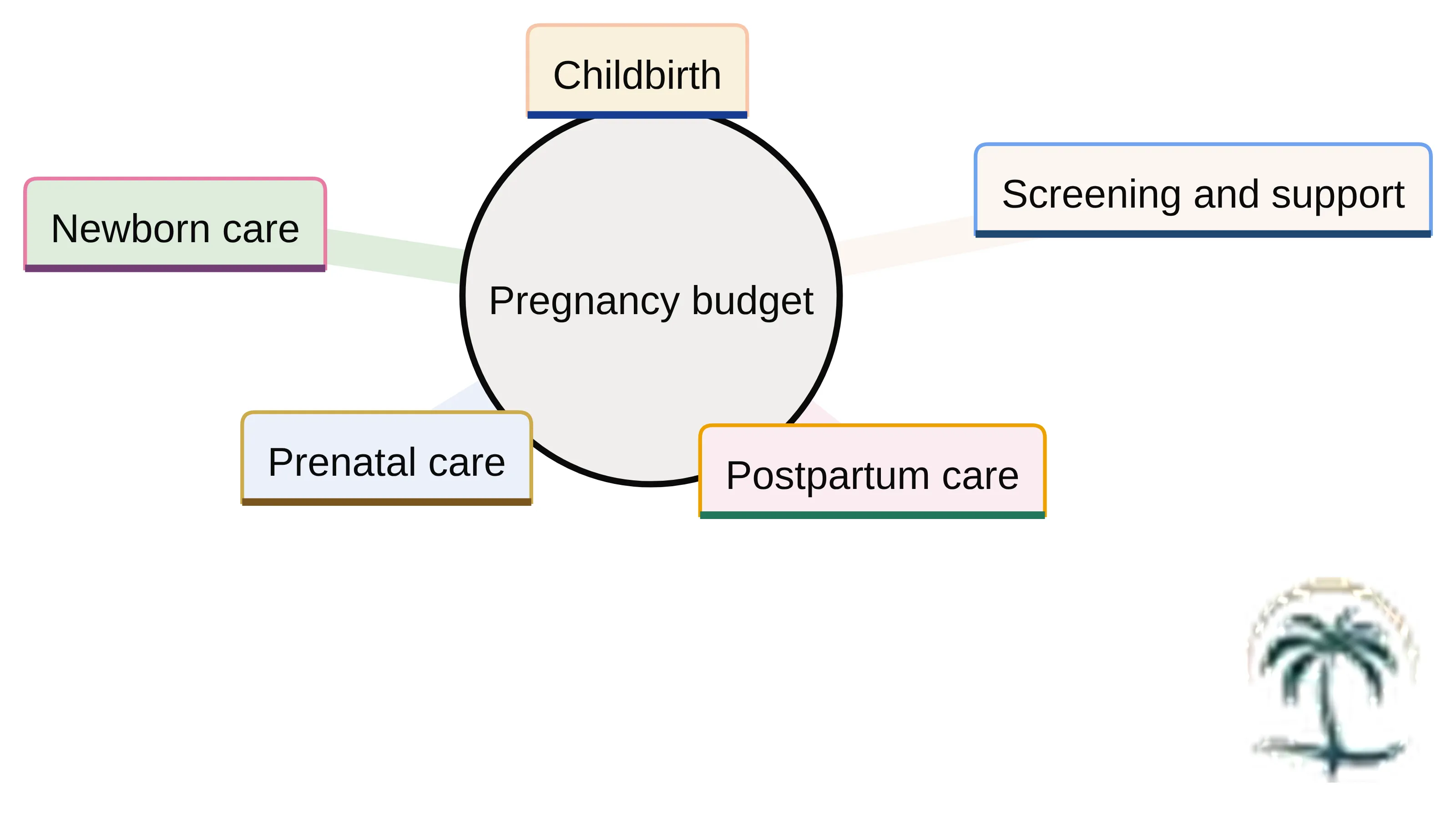
A pregnancy budget can include more than office visits and the birth itself. Start by sorting expected charges into these parts:
- Prenatal care: visits, monitoring, and services provided during pregnancy. ACOG’s 2025 consensus discusses visit frequency, monitoring, telemedicine, and other care options as parts of prenatal-care delivery.
- Screening and support: Healthcare.gov lists services such as gestational diabetes screening, folic acid supplements, and breastfeeding support and counseling for eligible women. Whether a service is covered or creates an out-of-pocket charge depends on the applicable plan or program.
- Childbirth: ask your insurer and OB-GYN which professional, facility, and related services are included in the delivery estimate. A national average does not tell you which charges apply to your planned setting or delivery type.
- Postpartum care: postpartum spending can include rehospitalizations, procedures, and lost wages when recovery keeps you away from work.
- Newborn care: newborn spending may be tracked separately from pregnancy and delivery spending.
The same employer-plan analysis found average newborn health spending of $5,820, including $475 out of pocket, for newborns with fewer than three months of enrollment. That is a separate figure from the $20,416 pregnancy, childbirth, and postpartum total, so do not add it automatically without checking what your own plan and estimate include.
To make the budget usable, write one line for each stage instead of putting everything under “delivery.” For each line, record the expected service, the provider or facility involved, the coverage question, and the amount your insurer or OB-GYN gives you. Leave a note beside any item that is conditional, such as extra monitoring, a change in delivery plan, or follow-up care after birth. This turns a broad estimate into a list you can update as your care plan changes.
Why is total health spending different from what you pay?
Total health spending and out-of-pocket spending describe different parts of the same care. In the employer-plan analysis, $20,416 was the average total for pregnancy, childbirth, and postpartum care, while $2,743 was the average out-of-pocket amount for that care. The out-of-pocket figure was included within the total; it was not an additional $2,743 on top of $20,416.
The estimate came from a subset of Merative MarketScan claims covering employer-plan enrollees from 2021 through 2023. That population and time period matter. The result describes claims associated with employer-sponsored coverage in the United States, not every person with a pregnancy and not a typical bill for every Miami family.
Use the two numbers for different planning tasks:
- Use the total-spending figure to understand the overall scale of care paid through the health system.
- Use the out-of-pocket figure as a broad benchmark for personal exposure among people in the study population.
- Do not assume the estimate includes every cost you may face, such as a separate newborn episode or a service outside the study’s scope.
Your estimate becomes more useful when it names your coverage and separates prenatal, delivery, postpartum, and newborn expenses.
KFF explains that health spending can involve public programs, private health plans, and patients’ out-of-pocket spending. That broader accounting is another reason a total spending number should not be read as your personal bill. Ask for the amount that applies to you, under your plan, for the services you expect to receive.
How can insurance change your pregnancy costs?
Insurance changes your estimate through the rules attached to your coverage, the providers and facilities you use, and the services your pregnancy requires. Before you rely on a number, ask which plan year applies, whether the OB-GYN and delivery facility participate in the plan, and how prenatal care, delivery, postpartum care, and newborn care are handled. A quoted total without those details is only a starting point.
If private coverage is not your only option, look at Medicaid or CHIP rules for your state. Healthcare.gov says eligibility depends on household size, income, and citizenship or immigration status, and that specific rules and benefits vary by state. KFF reports that all states have extended Medicaid eligibility for pregnant people beyond the federal minimum. Federal law sets a minimum pregnancy eligibility level of 138% of the federal poverty level for pregnant women, while states may set higher limits.
Healthcare.gov says pregnant people can apply for Medicaid or CHIP at any time during the year rather than waiting for the annual Marketplace Open Enrollment Period. If you qualify during pregnancy, the same source says coverage lasts at least 60 days after birth depending on the state, and some states extend postpartum coverage to 12 months. Treat those time periods as policy details to ask about for your state, not as a universal rule for every plan.
For budgeting, make a short coverage map:
- Name the plan or program you expect to use.
- List the OB-GYN, hospital, imaging location, laboratory, and other facilities you may use.
- Ask which services are covered and which could be billed separately.
- Ask how your expected out-of-pocket amount changes if the delivery plan or monitoring needs change.
- Record the answer, the date you received it, and the person or department you contacted.
This map gives you a place to compare an insurer’s estimate with the care plan from your OB-GYN.
Which care and delivery details can change the estimate?
The care model can affect what you need to ask about. ACOG describes individual prenatal care as one-on-one visits with an obstetrician or another obstetric care provider throughout pregnancy, childbirth, and the postpartum period, and says individual care remains standard practice. ACOG also says group prenatal care may suit some settings and patient groups while maintaining risk screening and physical assessment.
| Care approach | What to clarify for your budget |
|---|---|
| Individual prenatal care | How many visits and monitoring steps are expected, and which are included in the estimate? |
| Group prenatal care | Whether the practice offers this model, what individual assessments remain part of care, and how visits are billed? |
| A plan using telemedicine or another care option | Which visits can use that format, which still require in-person care, and whether the estimate changes? |
The table gives you questions to take to an OB-GYN. It does not establish that one model costs less than another.
Delivery type is another item to clarify rather than guess. Ask for separate explanations of the expected cost if the delivery plan changes, and ask which professional and facility services are included in each scenario. Your estimate should also state whether postpartum follow-up is included or listed separately. Without those details, a single delivery number can hide the conditions behind it.
ACOG’s 2025 consensus specifically discusses visit frequency and monitoring as parts of prenatal-care design. For pregnancies involving cardiovascular disease, a cited review says cost data are lacking for care such as preconception counseling, prenatal visits, testing, and management. That limitation applies to cardiovascular-disease care; it is a reason to request a condition-specific estimate rather than assume the national average answers the question.
What should you ask your insurer?
Your insurer can apply your plan’s rules to the services your OB-GYN expects. Ask for answers that separate prenatal care, delivery, postpartum care, and newborn care. You can use this list during a call or send the questions through your plan’s member service channel:
- Which providers and facilities are in network? Ask about the OB-GYN, delivery facility, laboratories, imaging locations, and any other providers your care team expects to use.
- What does my plan cover during pregnancy? Ask about routine prenatal visits, monitoring, screenings, delivery, postpartum visits, and newborn care as separate categories.
- What amount applies to my deductible, copay, coinsurance, or out-of-pocket limit? Ask which of these terms applies to each category of care.
- Will the delivery estimate change by delivery type or facility? Request separate explanations if the plan handles those scenarios differently.
- Could any part of care be billed separately? Ask how professional services, facility services, laboratory work, imaging, and other services are handled without assuming they are included in one bill.
- Are referrals, prior authorization, or other plan steps required? Ask when each step must happen and who submits it.
- How is postpartum care covered? Ask about the period after birth and whether rehospitalization or additional procedures are handled differently from a routine follow-up.
- How is the newborn’s care handled? Ask what coverage information, enrollment action, or timing applies after birth.
- If I may qualify for Medicaid or CHIP, who can explain my state rules? Ask about eligibility, application timing, and postpartum coverage rather than relying on a general national statement.
- Can you give me a written estimate or reference number for this conversation? Keep the response with your pregnancy budget so you can compare it with the estimate from your OB-GYN.
If an answer depends on the facility, delivery type, or a medical condition, write down that condition beside the amount. A number without its conditions is easy to misread later. When your plan or care changes, ask the insurer to update the relevant part of the estimate.
What should you ask an OB-GYN about prenatal care costs?
An OB-GYN can explain the care plan behind the estimate. ACOG describes prenatal care as evidence-based care intended to support the health and well-being of pregnant and birthing people and their children, with attention to visit frequency, monitoring, social needs, telemedicine, and other care options. Use that clinical plan as the starting point for a cost conversation, then ask your insurer to apply your coverage.
Ask your OB-GYN:
- Which prenatal visits, screenings, monitoring steps, and education services do you expect for my stage of pregnancy?
- Which parts are routine, and which would depend on a symptom, test result, or medical condition?
- How often might the visit schedule or monitoring change, and what would cause that change?
- Which delivery settings and delivery types should I compare for planning purposes?
- What does the practice’s estimate include, and which facility or other provider may bill separately?
- Is postpartum follow-up included in the estimate, or should I budget for it separately?
- If my pregnancy involves a condition that needs added management, which services should I ask the insurer to price separately?
- What questions should I take back to the insurer after you explain the clinical plan?
These questions help you connect the medical plan to the financial plan without asking an OB-GYN to predict the exact amount your insurance will pay.
Bring the national figures only as context. The employer-plan analysis covered pregnancy, childbirth, and postpartum care together, while the review on cardiovascular disease notes that some condition-specific cost data are lacking. Neither source can replace a plan-specific estimate. Your OB-GYN can describe the care you may need; your insurer can describe how your coverage applies.
How can you plan prenatal care costs in Miami?
You can make a realistic Miami pregnancy budget by starting with the U.S. employer-plan benchmark, then replacing its broad assumptions with your own coverage, provider, facility, delivery plan, and postpartum needs. Keep total health spending separate from your out-of-pocket estimate, and keep newborn costs on their own line unless your insurer or OB-GYN confirms they are included.
Before you choose or budget for prenatal care, keep these items together:
- your insurer’s answers about network status and covered services;
- the deductible, copay, coinsurance, and out-of-pocket details that apply to your plan;
- the OB-GYN’s expected visit, monitoring, delivery, and postpartum services;
- separate estimates for changes in delivery type or pregnancy-related care needs; and
- any Medicaid or CHIP questions that depend on your state, household, income, or coverage status.
We plan to open in 2027. We cannot give you a current price, appointment, or delivery arrangement through this article, so use the questions above to prepare for future prenatal care planning with Vireo Women’s Health in Miami. A qualified professional should decide whether a particular care plan fits your medical situation, and your insurer should apply the financial terms to your specific coverage.
What should you know about prenatal care and delivery costs?
What does the pregnancy budget include?
A pregnancy budget can include prenatal care visits, screenings, childbirth services, postpartum care, and newborn care. Each component may have different coverage and out-of-pocket costs depending on your insurance plan.
How can insurance change your pregnancy costs?
Insurance affects your pregnancy costs through coverage rules, provider networks, and the specific services required. It’s important to clarify these details with your insurer to understand your financial responsibilities.
What should you ask your insurer about prenatal care costs?
You should ask your insurer about in-network providers, coverage for prenatal visits and delivery, out-of-pocket costs, and whether any services could be billed separately. This information helps you create a more accurate budget.
What should you ask an OB-GYN about prenatal care costs?
Inquire about the expected prenatal visits, screenings, and delivery settings. Ask which services are included in their estimate and if postpartum follow-up is covered, as well as any condition-specific costs.
How can you plan prenatal care costs in Miami?
To plan your prenatal care costs in Miami, start with national averages, then adjust based on your specific insurance coverage, provider, and delivery plan. Keep track of all relevant costs separately.
What are the average costs associated with pregnancy and childbirth in the U.S.?
The average total health spending for pregnancy, childbirth, and postpartum care is approximately $20,416, with out-of-pocket expenses averaging around $2,743 for women enrolled in employer-sponsored health plans.
What factors can affect the total cost of prenatal care and delivery?
Factors that can affect the total cost include the type of delivery (vaginal or cesarean), the complexity of the pregnancy, the specific services required, and the insurance coverage you have.
Living with this?
We treat this in Miami.
Our clinicians are board-certified in obstetrics and gynecology. Reading about a condition only goes so far — an exam, and the right imaging, tell you which of these actually applies to you.